Paper Cottage
A stationery brand I built from scratch: the idea, the products, the visual world, and the person standing behind the table selling it.
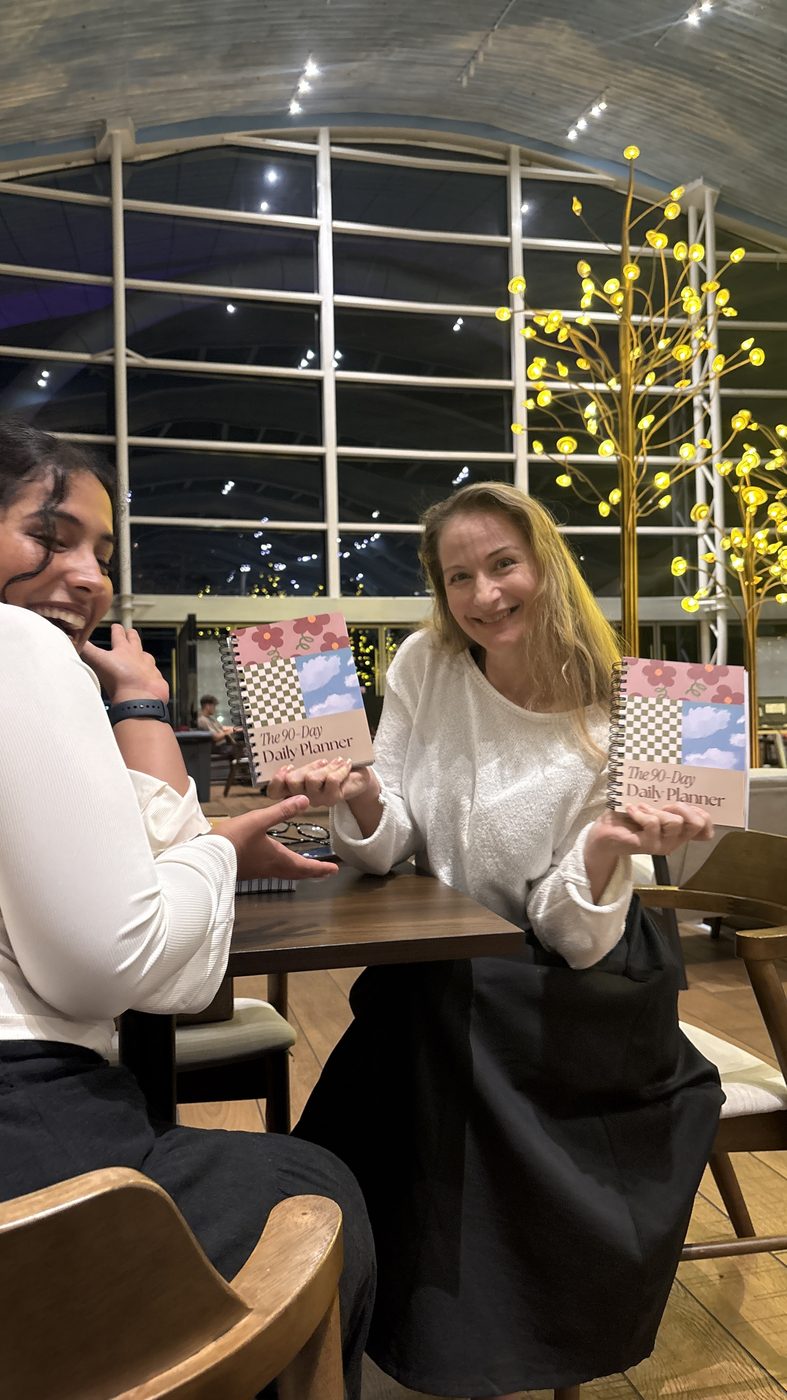
Paper Cottage is a stationery brand I started in December 2025, inside a startup society called Network School in Forest City, Malaysia. Journals, planners, pocket notebooks, pens, sticky notes, washi tape, greeting cards. Objects that only really work if you slow down enough to use them.
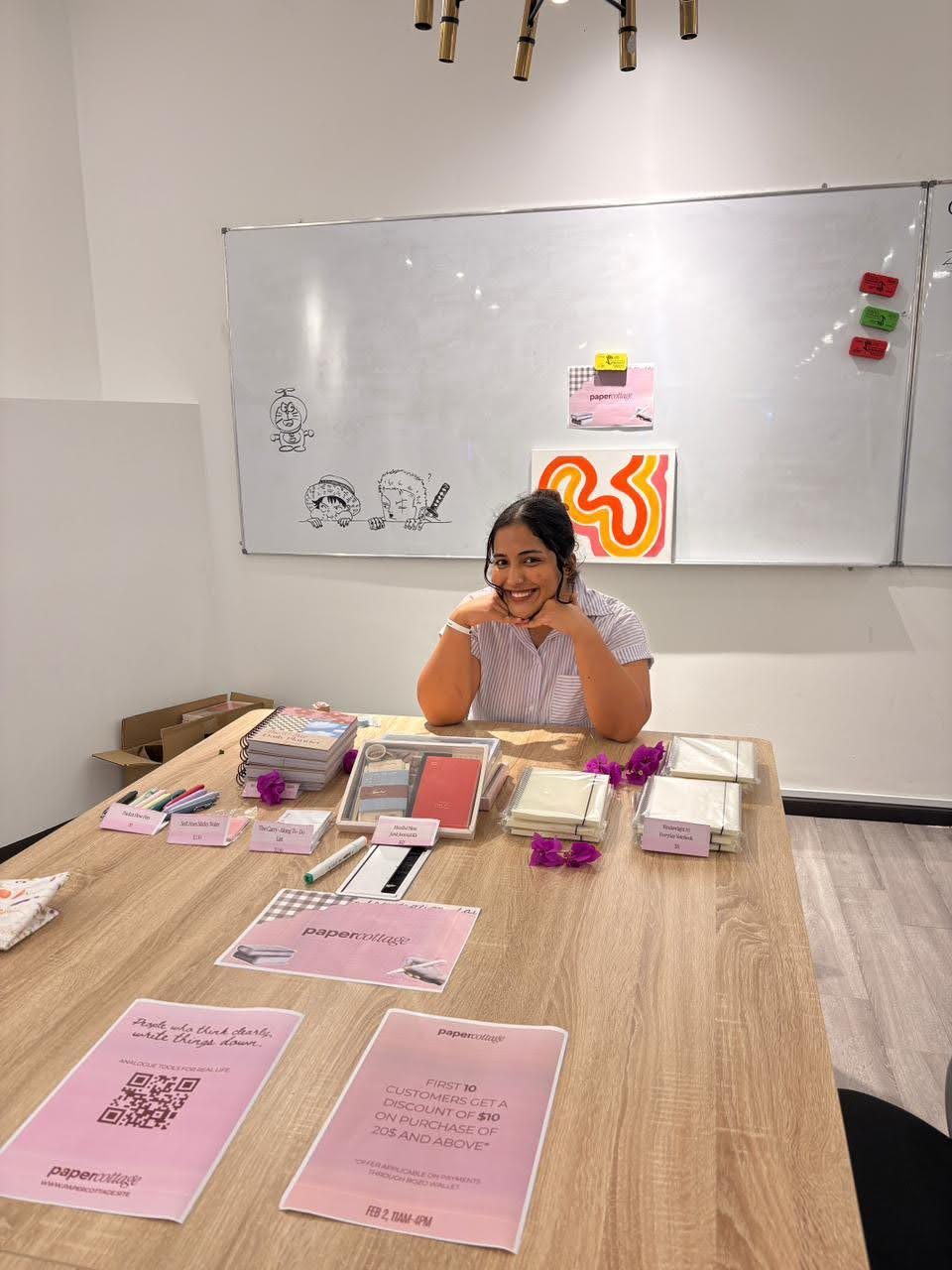
All of it. Product, branding, identity, photography, copy, packaging, and standing behind the table selling.
Why it started
There were three things sitting next to each other in my head.
- 1I wanted to spend less time on my phone, and I knew that simply deciding to use it less was never going to hold. I needed somewhere else to put my hands and my attention, something with a bit of weight to it.
- 2I wanted a planner that had the things I actually wanted in it. I'd bought enough of them by then to know which pages I kept skipping and which ones I kept wishing were there.
- 3I've wanted to have a stationery brand for about as long as I've wanted anything.
The first planner
I researched hard about what works in a planner and what doesn't: why people abandon them by February, which spreads get used and which get ignored. Then I stopped reading and started asking. Network School is a campus full of people who plan obsessively for a living, so I ran surveys, sat with people, and went through the planners they were already using to ask what they'd never once opened.
Then I designed. Monthly pages, weekly pages, daily pages. I made it 90 days rather than a full year, because ninety days is something you can see the end of, short enough to measure yourself against honestly.
“A year-long planner asks you to predict who you'll be next November. Ninety days doesn't ask that of anyone.”
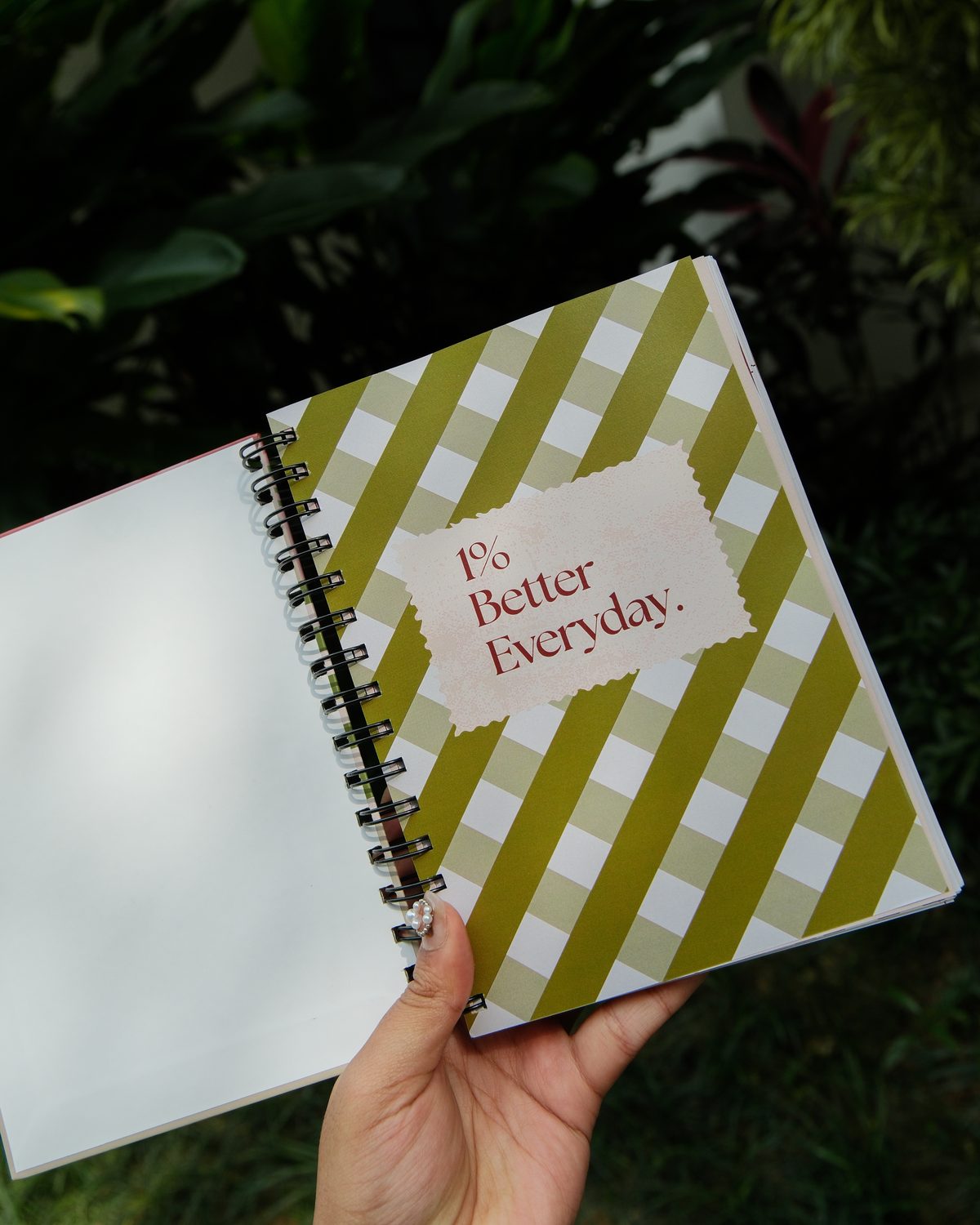
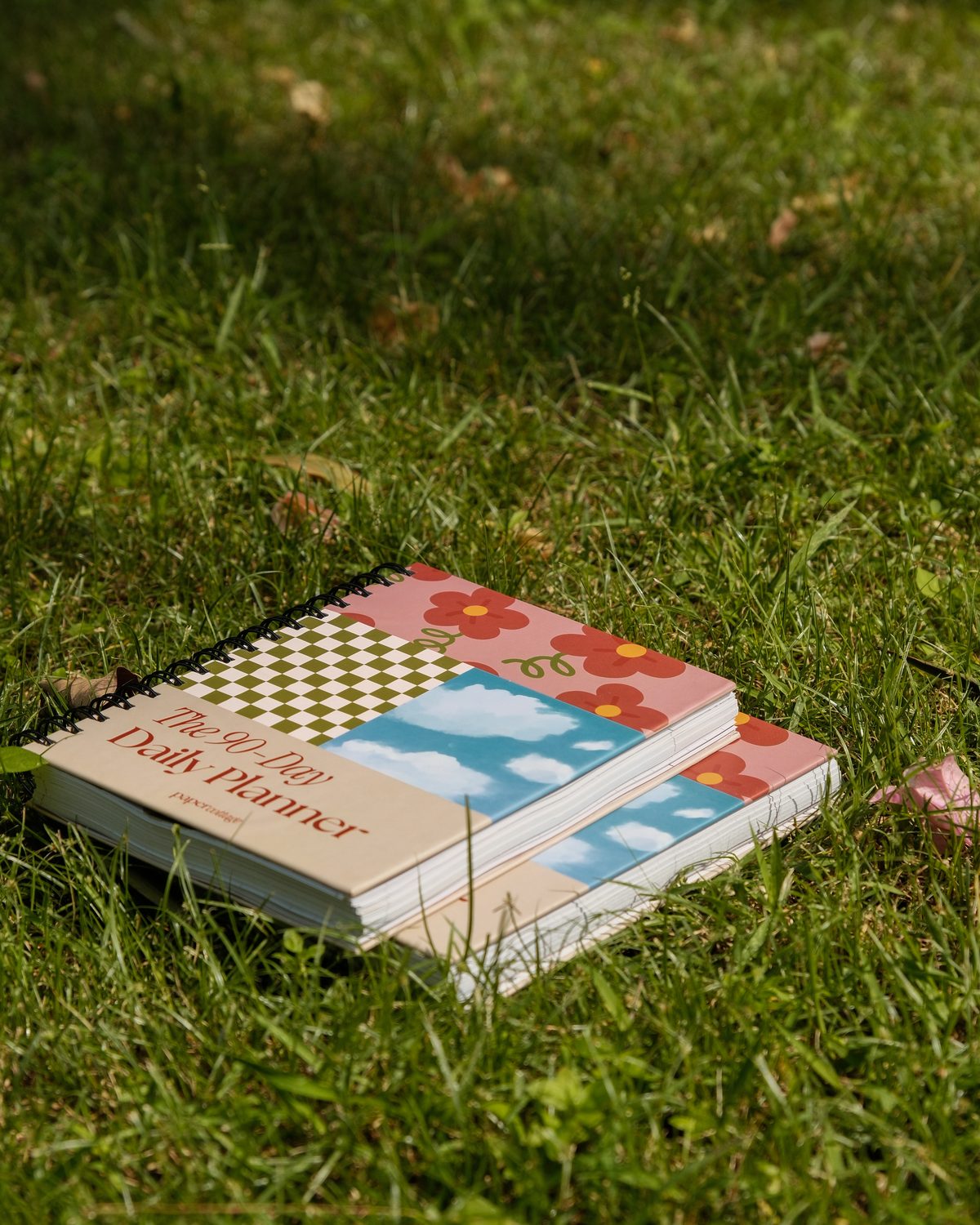
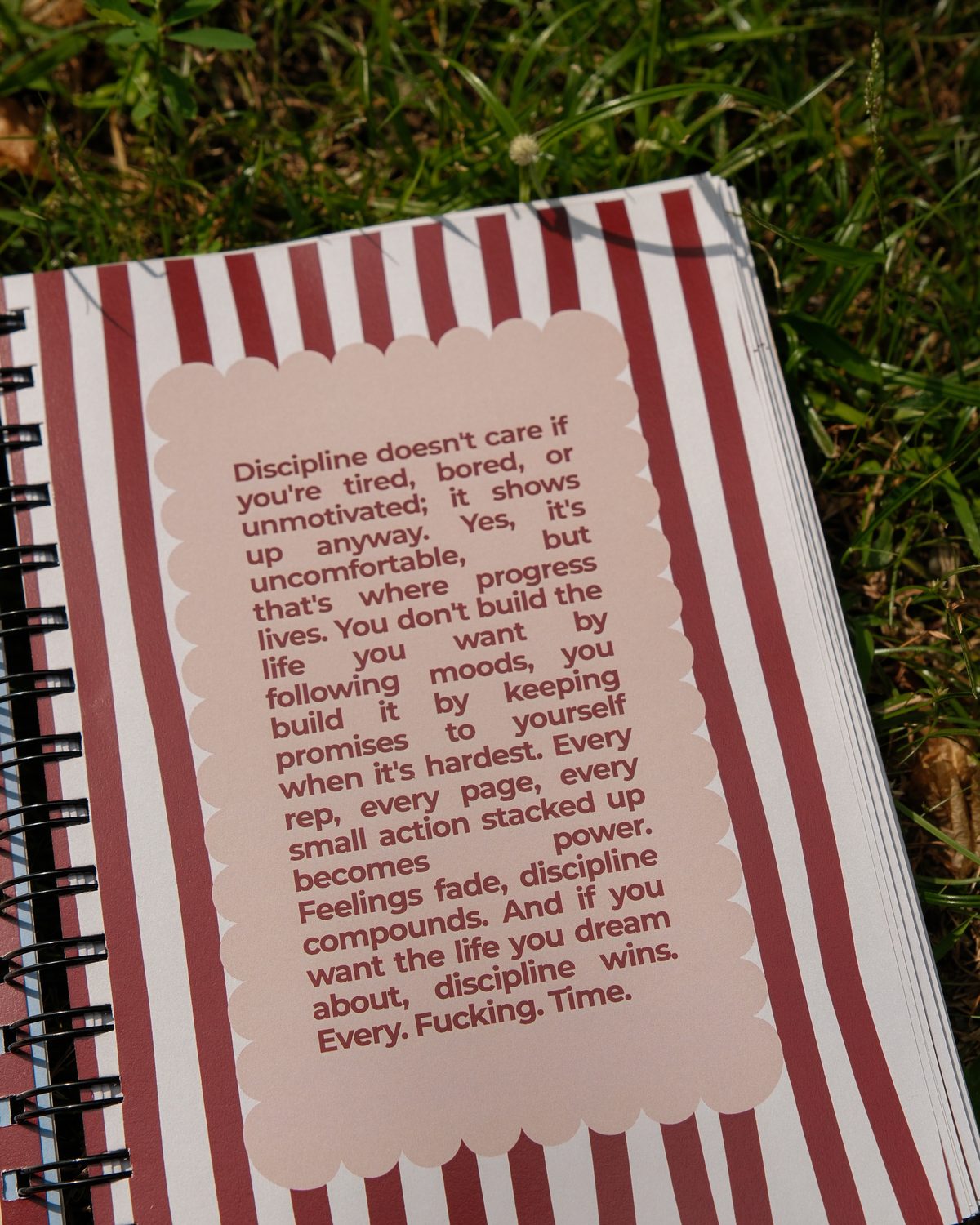
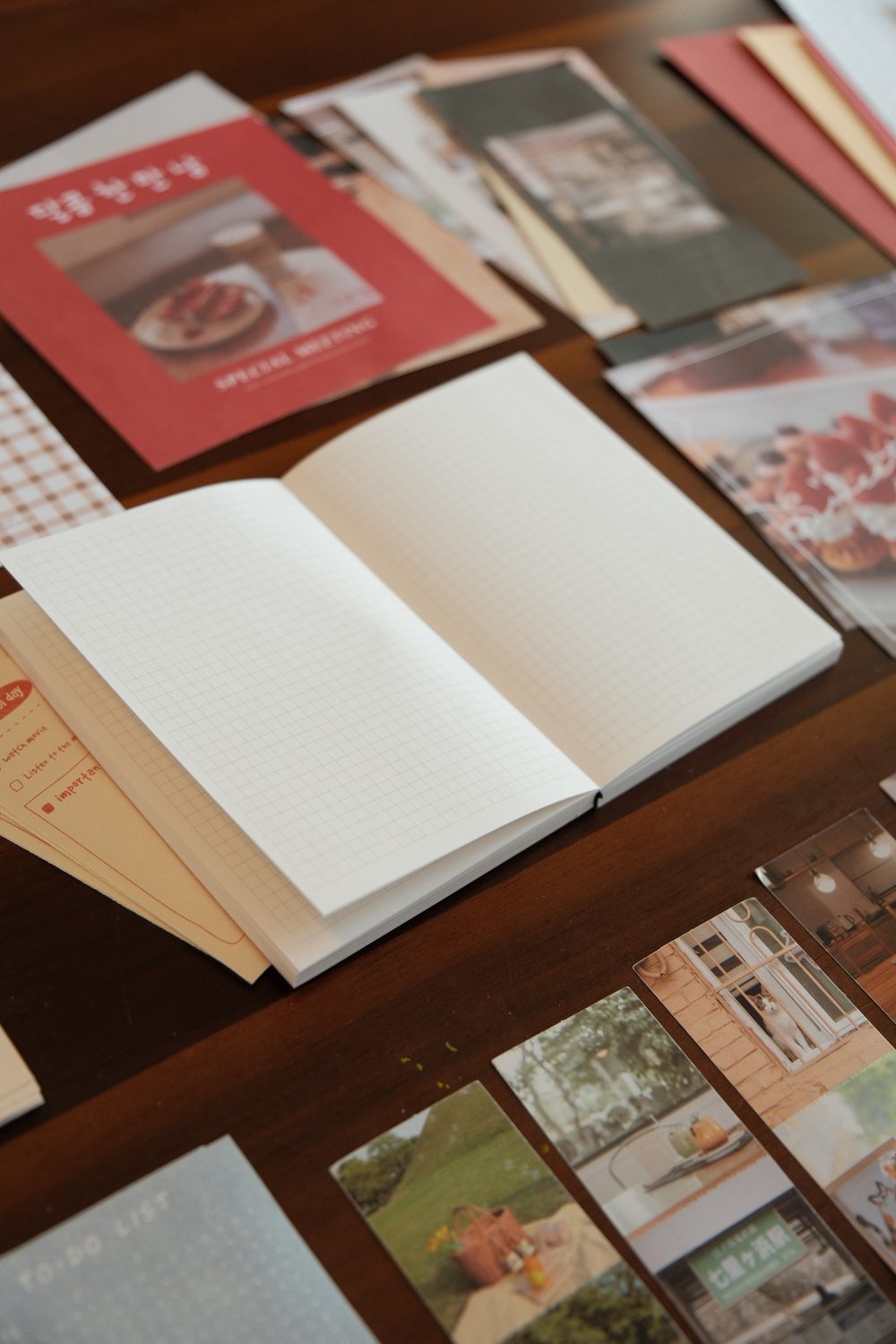
After that came printers. Quotes, paper weights, binding options, samples that came back wrong and samples that came back right. I sent the first batch to print without knowing whether anyone besides me wanted it.
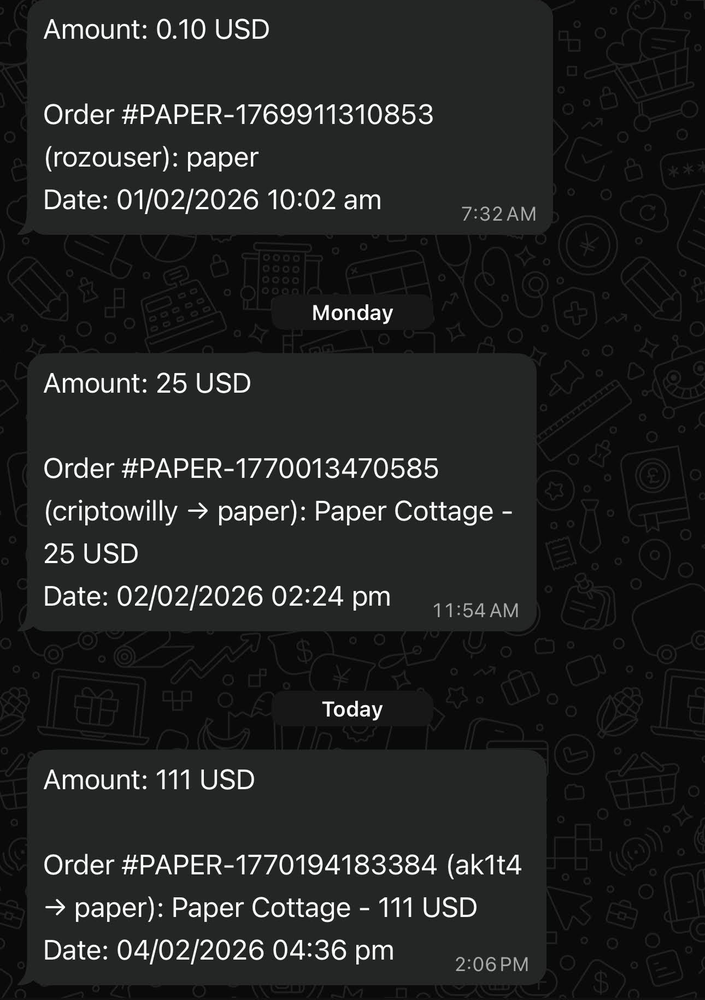
What that turned into
A sold-out first batch is a small number in absolute terms. It mattered because it was the first proof that a thing I'd been carrying around for years could exist outside my head, and other people would pay for it. That was the point it stopped being a planner and started being a brand.
So I went looking for suppliers and built out the range: journals, pocket notebooks, pens, sticky notes, washi tape, greeting cards. Everything held to the same rule the planner was built on: that it should reward attention rather than demand it.
Building the brand
Paper Cottage had to look like what it was asking of people, which meant the identity came before any product description could do its job. Cottage-inspired, warm, unhurried, made slowly and on purpose.
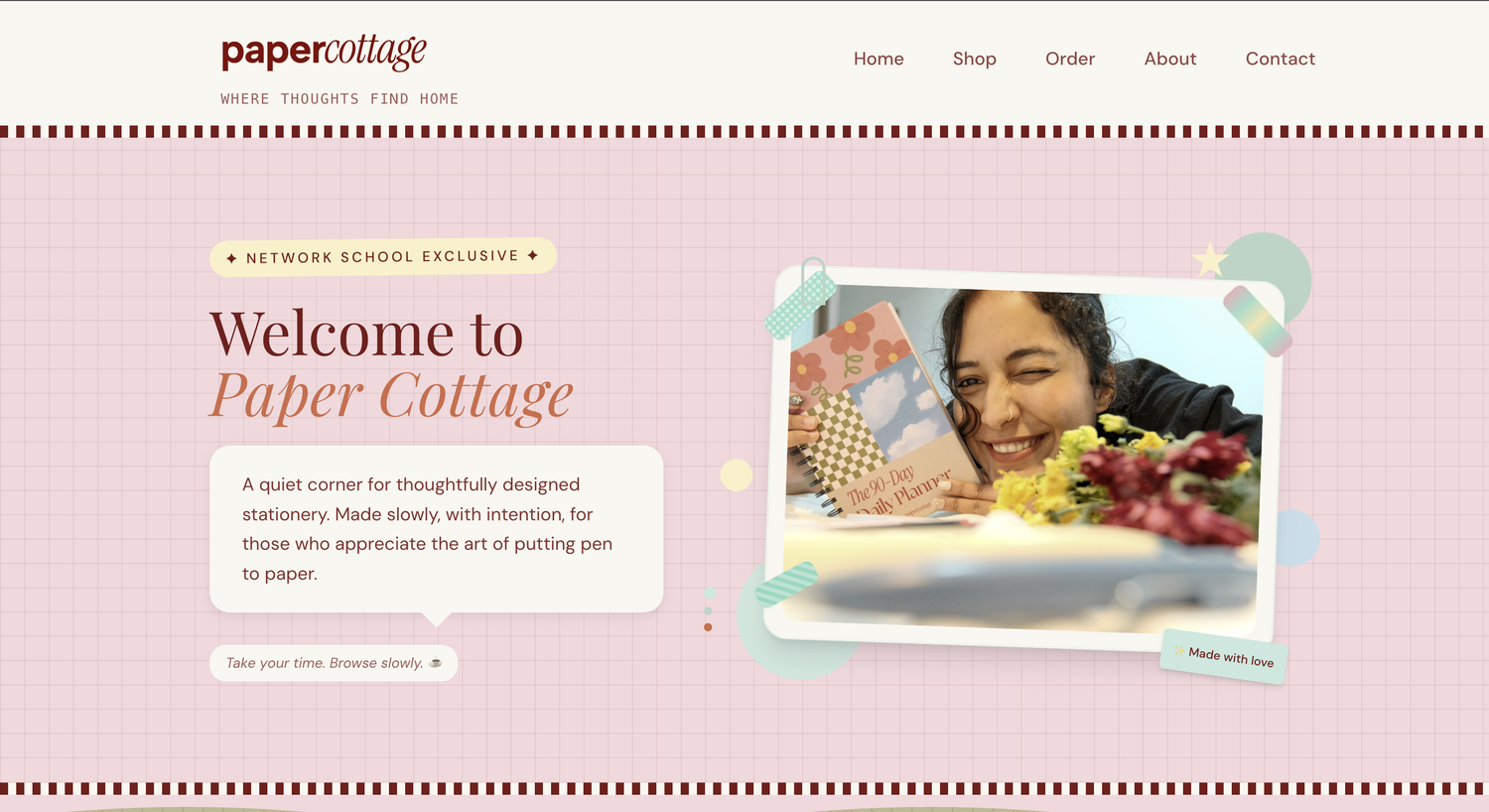
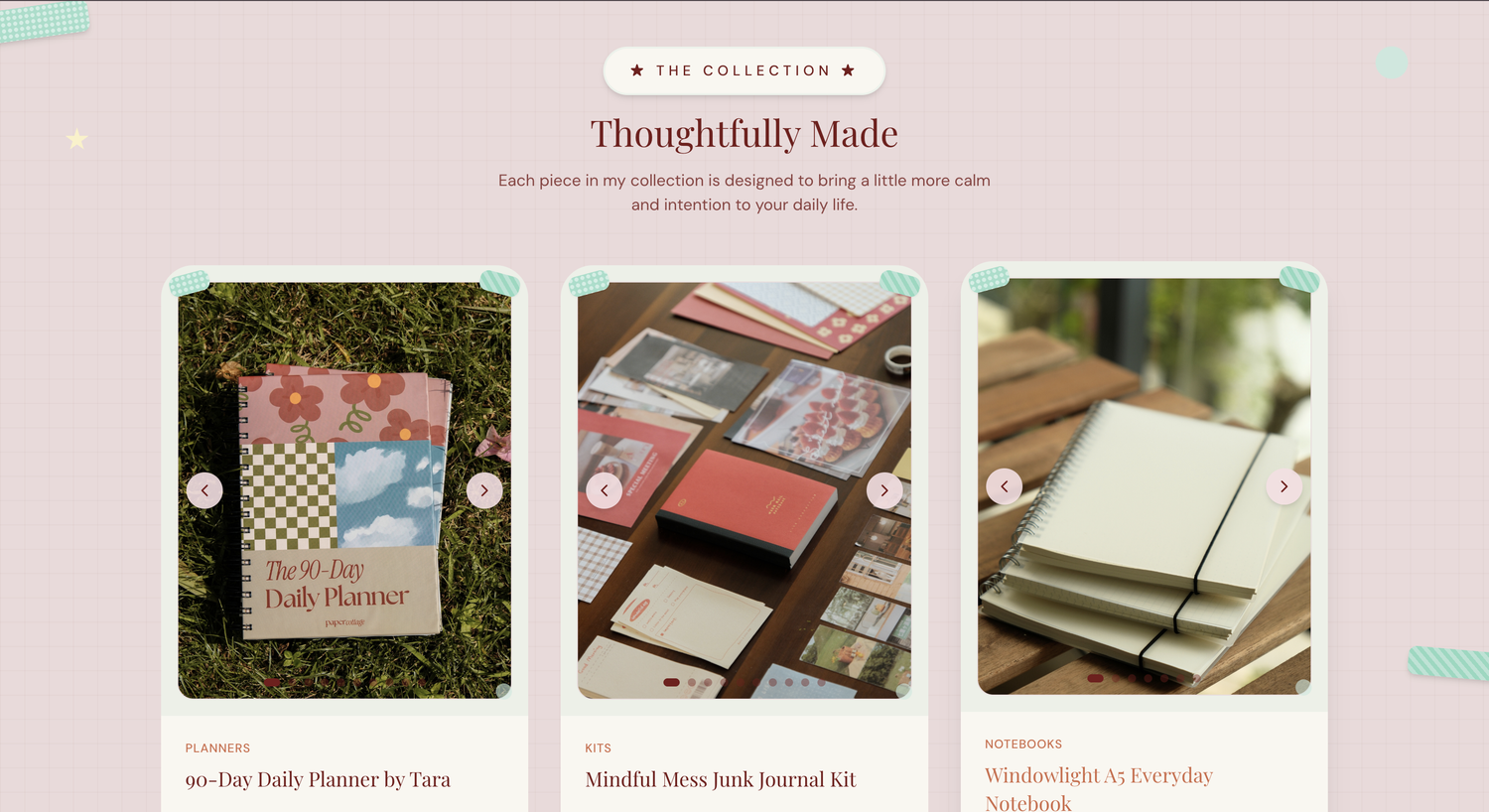
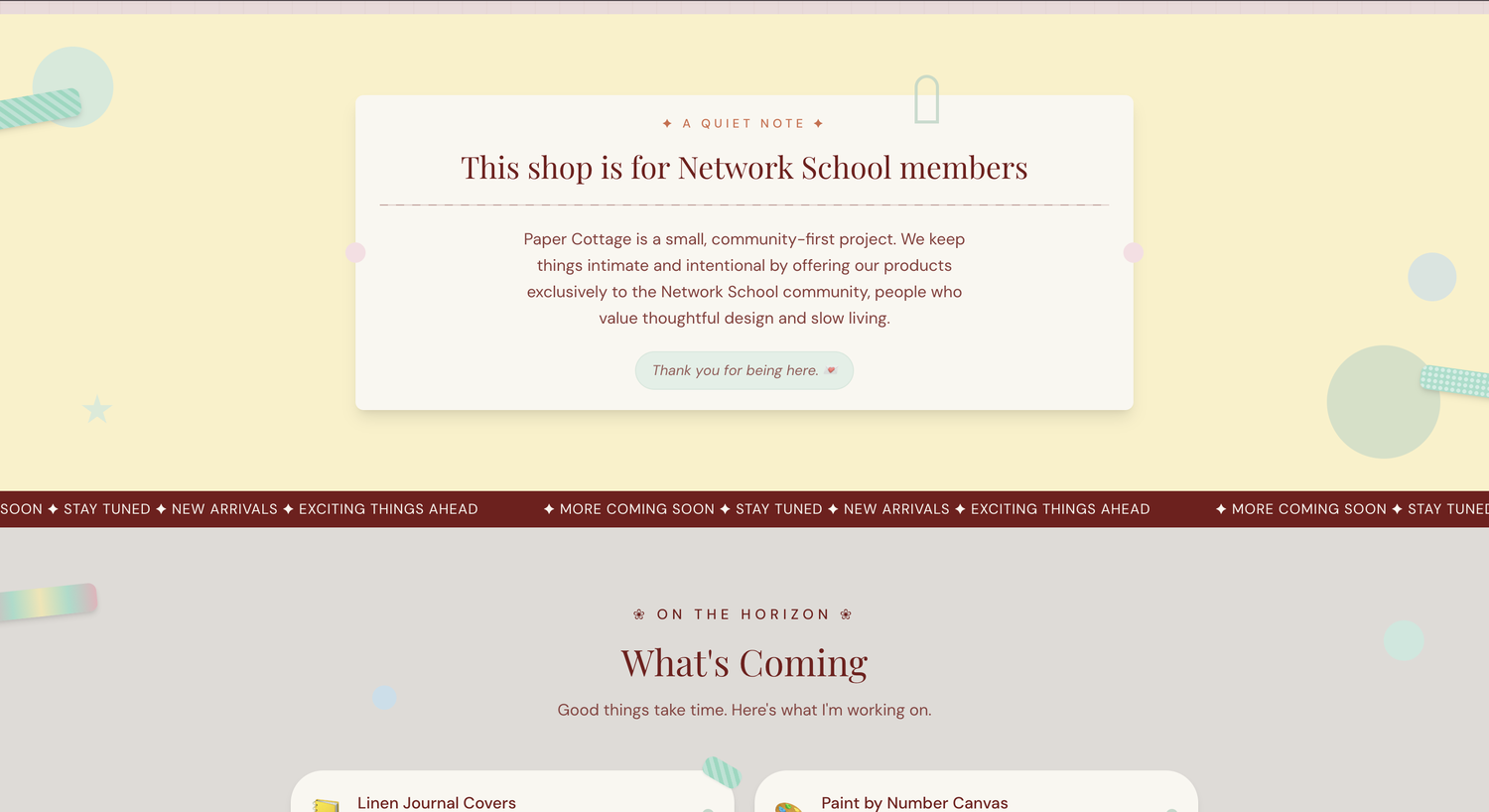
I shot the products the way you'd shoot a still life, not the way you'd shoot a catalogue item. The posters I made for pop-ups were editorial rather than promotional. The copy is written the way I'd describe a notebook to someone standing at the table, because that's usually where it was being read.
I sold it inside the community I was living in. Pop-ups at Network School (paper goods in a room full of laptops), so the tension worked in my favour. The people deepest into screens all day turned out to be the ones most interested in something analog to close the day with.
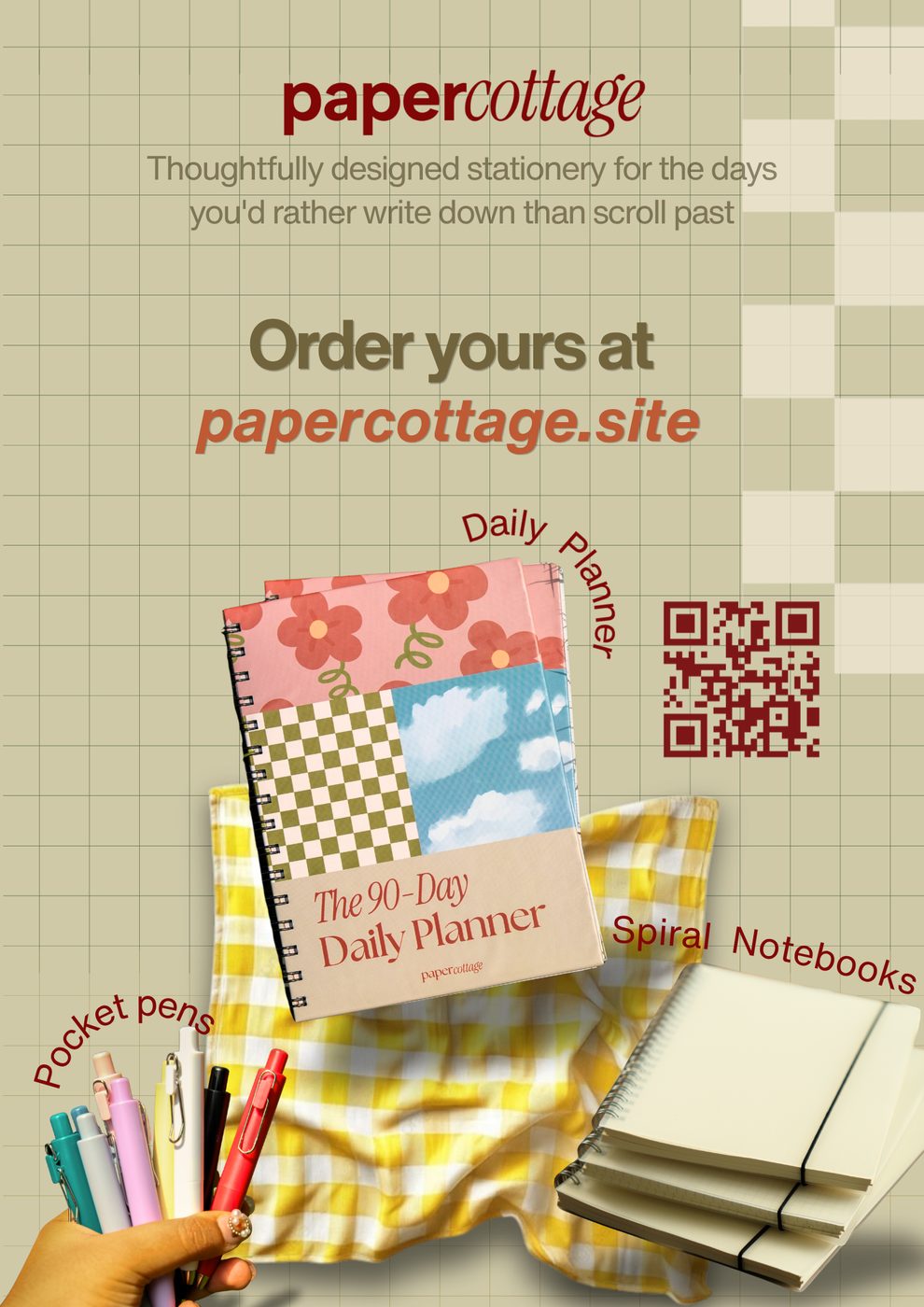
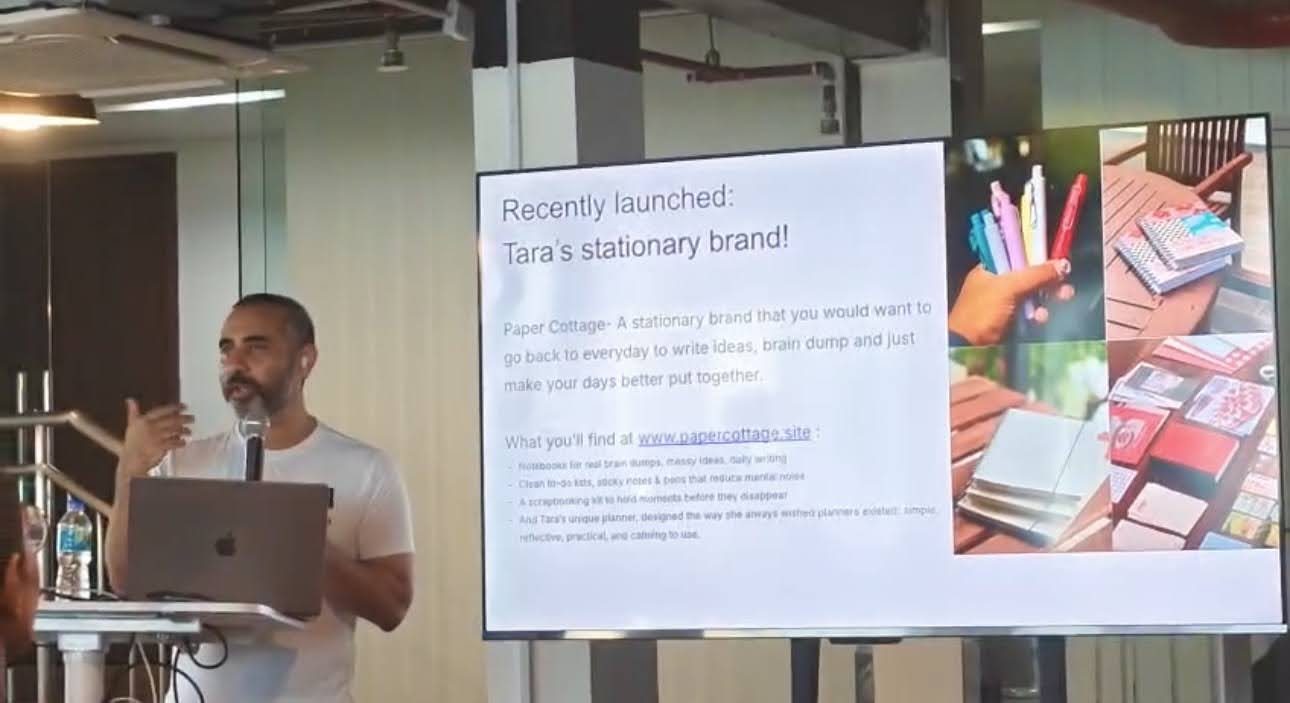
Balaji Srinivasan put Paper Cottage up on a slide at Network School, with the words “Recently launched: Tara's stationery brand.”
Why it's on this site
Everything else here is work I did for someone else. Paper Cottage is the one where I'm the client.
Every decision I usually make for founders (what the brand stands for, how it sounds, what it looks like in a feed, what it feels like to hold) I made here first, with my own money and nobody to sign it off.
“It's the shortest distance between what I recommend and what I'll actually do myself.”